
Traverse City, MI · Garage Door Service
When Your Opener Meets a Winter Power Outage
Traverse City homes built mostly in the 1980s and 90s meet a cold, outage-prone climate. Here's how opener age and winter power loss intersect, and when to call.
- Repairs & new doors
- Springs & openers
- Serving 7 nearby communities
When to Get Help
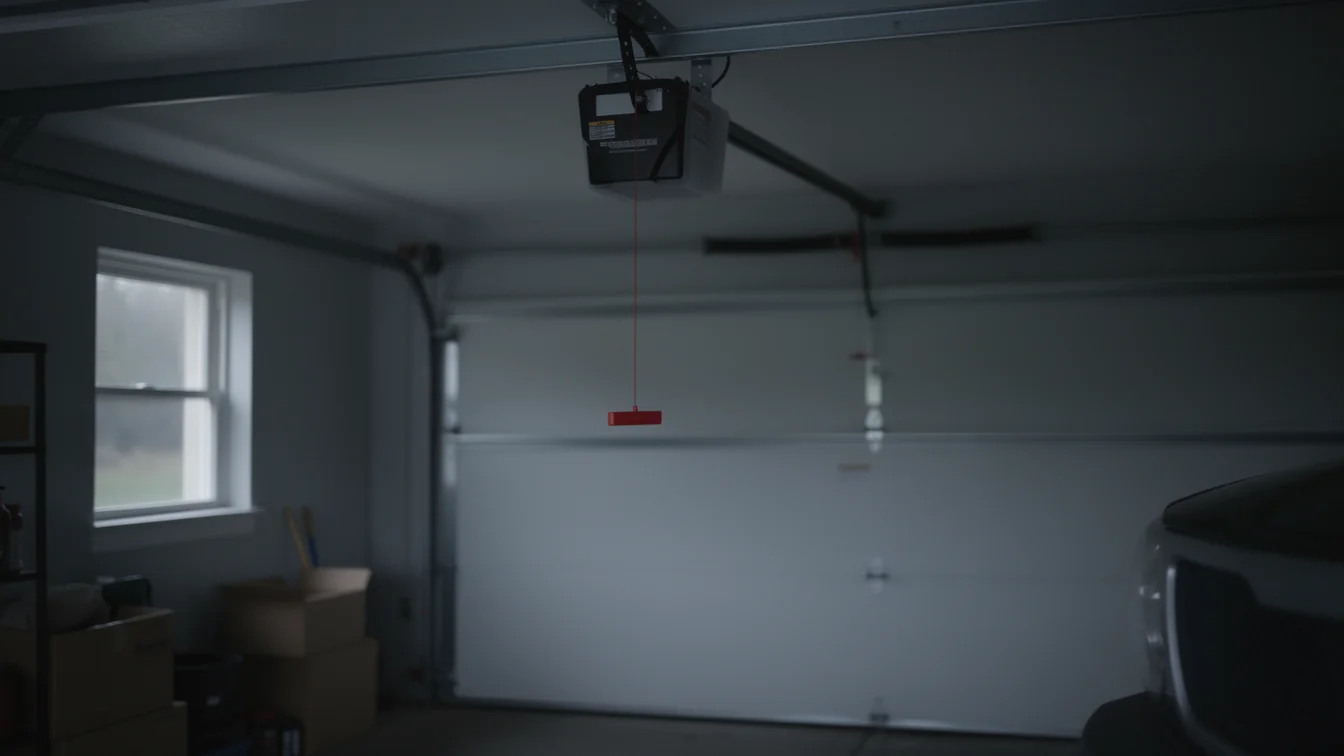
Call before the morning you're stuck. If your opener is original to a house built in the 1980s or 90s window that covers most of this area, it was wired to the era's standard: no battery backup, a single remote frequency, and a drive system that was never built to ride out repeated outages gracefully. If the motor hums but the door won't move after the power comes back, or the wall button does nothing while the remote still half-works, that's a logic board or capacitor issue, not something to keep testing yourself. Get it looked at before the next cold snap, not during it. A dead opener on a night the roads are bad is a worse problem than a dead opener on a Tuesday afternoon.
If you've already lost power this winter and had to pull the manual release to get a car out, and the door felt heavier than it should afterward, have someone check the spring before you reconnect the opener. Forcing a cold, stiff door by hand is how springs and openers both end up damaged the same week.
The Problem
Across the roughly 6,627 owner-occupied houses in this area, most garage doors are paired with openers that predate battery backup becoming a common feature. That's a direct consequence of when the housing stock went up - the bulk of it between 1967 and 2001, with 1988 as the rough midpoint. An opener installed or last replaced in that window, and plenty haven't been touched since, has no fallback when the grid drops. The manual release cord still works, but it only disconnects the trolley; it doesn't make a heavy insulated door easy to lift by hand, especially once cold has stiffened the torsion spring.
The second half of the problem is timing. Outages here don't arrive on a schedule, and when one hits during a cold stretch, a door stuck closed or stuck open stops being a convenience issue and becomes a way to lose heat out of an attached garage fast. Owners in a $77,000 median-income area aren't necessarily budgeting for an opener replacement until the old one actually fails, which means a lot of units are running past the point where a battery backup unit would have paid for itself in peace of mind alone.
How Local Conditions Play In
This region sits in a cold-severe climate band, and that matters for openers in a way people don't expect until it happens. Cold doesn't just stiffen springs - it affects the opener itself. Chain and belt drives both run slower in deep cold, circuit boards in unheated garages can behave erratically below a certain temperature, and a motor that's already marginal will often fail first on the coldest morning of the stretch, not gradually. Combine that with a power outage, which this climate band is prone to during the same storms that bring the hard cold, and you get the worst version of the problem: no opener, a door that's hard to lift by hand, and a vehicle you need to get out of the garage before the roads get worse.
For the 15 named areas that make up most of the local stock, this isn't a once-a-decade scenario. It's a winter-recurring one. A battery backup opener, or at minimum a working manual release and a spring in good condition, turns a stuck morning into a two-minute inconvenience instead of a call for help you can't get until afternoon.
Leaving It Alone
Here's the honest limitation: if your opener is original to a house built in the late 1980s and it's still running fine, replacing it before it fails is a judgment call, not a requirement. We're not going to tell every owner in a 1988-median-built house to swap out a working unit just because newer ones have battery backup. If the unit starts, closes fully, and reverses properly on an obstruction test, it's still doing its job.
What we won't do is recommend you ride out repeated outage-and-cold-snap cycles on an opener that's already showing signs - slow starts, inconsistent remote range, a motor that runs hotter than it used to. At that point you're not maintaining it, you're waiting for the exact morning described above. And if the door itself is original to the house rather than just the opener, have both looked at together; an old door on an old opener fails as a pair more often than people expect.
Frequently asked questions
Does my opener need a battery backup if I lose power a lot in winter?
If outages during cold snaps are routine where you live, a battery backup unit means you're not pulling the manual release on a stiff, cold door in the dark. It's not mandatory, but for a house running an original 1980s-90s opener, it closes the exact gap that era of equipment was built without.
Why is my old opener slower in cold weather?
Chain and belt drives both stiffen in deep cold, and circuit boards in an unheated garage can lag below a certain temperature. If your opener dates to the area's common 1980s-90s build window, it wasn't engineered with modern cold-weather tolerances, so the slowdown is normal aging, not necessarily failure.
Is it safe to force the door open by hand during an outage?
The manual release disconnects the trolley, but it doesn't make a cold, heavy door easy to lift. If it feels stuck rather than just heavy, stop - that's often a spring problem, and forcing it can damage the opener or the door further once power returns.
Related garage door services in Traverse City
More garage door guides
Book garage door service in Traverse City
Call now or request a quote - tell us what the door is doing and where you are.