
Traverse City, MI · Garage Door Service
When an Old Garage Door in Traverse City Is Worth Saving - and When It Isn't
Traverse City homes mostly date 1967-2001, built for a cold-severe climate. Here's how to tell if your aging garage door is a repair or a replace.
- Repairs & new doors
- Springs & openers
- Serving 7 nearby communities
When to Get Help
Most of the garage doors we get called on here went up between 1967 and 2001, with the bulk of that stock dating to the 1980s and 90s. That matters because a door from that era is a different animal than something installed in the last ten years - different spring sizing, different track gauge, sometimes a jamb that's settled a half inch out of square after three decades of frost heave. Call someone out when the door is off its tracks, when a cable has jumped the drum, when the opener runs but the door won't move, or when a spring has let go with that flat bang homeowners describe over the phone. Those are safety calls, not maintenance calls. Don't wait on them. If the door is just noisy, slow, or stiff in January, that's worth a look too, but it's not an emergency - it's the kind of thing that tells you where you stand before it becomes one. The honest answer on timing: if a torsion spring has gone and the door is original to a house built before 2001, it's usually still worth fixing. If the track, opener, and springs are all failing at once, that's a different conversation.
The Problem
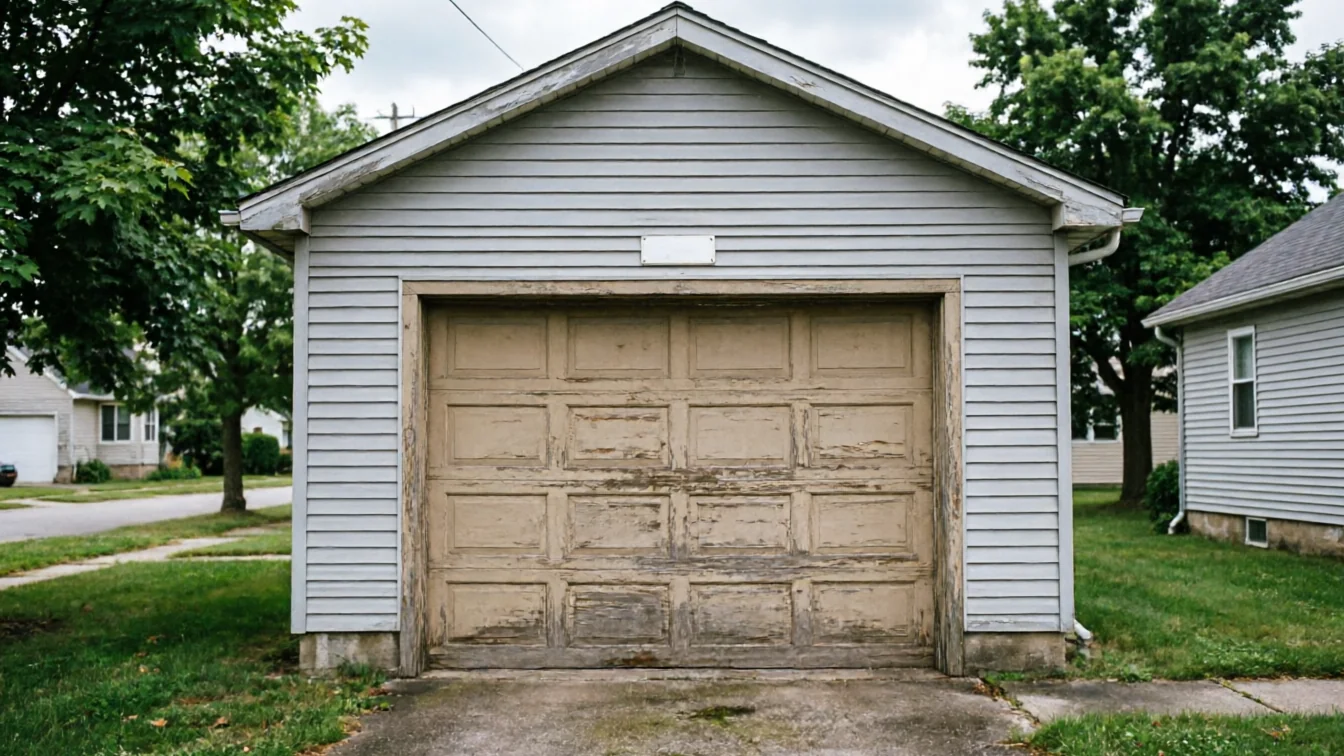
A door built when your house was built - call it 1988, the median year for homes in this area - was engineered for the loads and codes of that decade. Panels were often lighter-gauge steel, insulation was minimal or absent, and rollers were plain nylon on steel stems that wear a groove over time. None of that makes the door bad. It makes it a product of its decade, same as the house around it. The trouble shows up when one part fails and the rest of the system has to compensate. A worn roller puts extra side-load on a track that was never shimmed for it. A spring that's lost ten percent of its wind still runs the opener, but the opener now works harder every single cycle, which shortens its life too. Across the roughly 15 named pockets of this service area, the pattern is close to identical: 1980s and 90s builder-grade doors, original hardware in a lot of cases, aging as a system rather than failing all at once. That's good news if you catch it early. It's a bigger bill if you don't.
How Local Conditions Play In
This is cold-severe country, and that climate works a garage door harder than people expect. Steel contracts in deep cold, which tightens tolerances on tracks and hinges that were already worn. Grease that was fine in August turns stiff in January, and an opener fighting stiff grease and a slightly bent track will eventually burn out trying to do a spring's job. Weatherstripping on an original 1980s-era door was rarely built for decades of freeze-thaw cycling, and once it cracks, you're not just losing heat - you're letting moisture in around the bottom panel, which is where rust usually starts on an older steel door. None of this means replace the door at the first cold snap. It means a door that's 25 to 40 years old, in a climate that runs this cold this often, needs its hardware checked before winter rather than after something fails at 10 degrees. With 6,627 owner-occupied houses in this service area, most built before 2001, a lot of that original hardware is still doing the job - it just needs the cold-weather check a milder climate wouldn't demand.
Leaving It Alone
Here's the limitation worth saying out loud: we don't push replacement on a door that's fixable. A worn spring, a bent track section, a dead opener board - those are repair jobs on even a 30-year-old door, and they usually cost a fraction of a new installation. Where it stops making sense is when the door itself has failed structurally - rusted through at the bottom panel, warped enough that it won't seal, or sized and styled for an opening that doesn't match current hardware availability. At a median household income of $77,000 in this area, most owners we talk to are weighing a few hundred dollars against a four-figure replacement, and that's a real decision, not an easy one. Ignoring a known problem doesn't save money here - a spring left unwound eventually takes the cable with it, and a cable failure on an old door can crack a panel on the way down. If your door is from the 1980s or 90s and something's acting up, the move is to find out which kind of problem you've got before you decide anything.
Frequently asked questions
How do I know if my garage door is original to my house?
If your Traverse City home was built in the 1980s or 90s, which covers a large share of the area, check the data plate on the inside of a panel or along the end stile - it often lists a build or install date. No plate usually means it predates that labeling practice, which itself suggests original hardware.
Is it worth replacing an old door just because of the cold?
Not on its own. Cold stresses hardware, but it doesn't ruin a sound door. We'd rather tighten, lubricate, and check the spring tension on an older door before a hard winter than replace something that still has life in it.
What's the most common failure on a 1980s or 90s door around here?
Torsion springs losing wind tension and worn rollers putting side-load on the track. Both are repair jobs, not replacement jobs, in most cases we see.
When does an old door stop being worth fixing?
When the panel steel has rusted through at the bottom, or the frame has warped enough that the door won't seal against the weatherstripping. At that point you're patching a structural problem, not a mechanical one.
Related garage door services in Traverse City
More garage door guides
Book garage door service in Traverse City
Call now or request a quote - tell us what the door is doing and where you are.