
Traverse City, MI · Garage Door Service
Garage Door Repair Built Around Traverse City's Housing Stock
Garage door repair for Traverse City homes built mostly between 1967 and 2001, where cold winters and original hardware wear out springs, cables, and openers early.
- Repairs & new doors
- Springs & openers
- Serving 7 nearby communities
What Is on the Truck
Most calls we run in Traverse City come down to a handful of parts, and the truck is stocked for the ones that fail most on houses from this stretch of build years: torsion and extension springs sized for doors from the late 1960s through the early 2000s, galvanized lift cables, nylon and steel rollers, and openers that match the drive types common on homes built when the median house here went up, around 1988. We also carry replacement hinges and center bearings, since doors from that era are old enough now that the original hardware is wearing out on a lot of them at once.
What we don't carry on every run is a full custom door. If your opener or spring is a standard size, we can usually finish the same visit. If the door itself is a special order width or a style that's no longer made, that part has to be ordered, and that's the one honest delay we can't shortcut no matter how fast the rest of the job moves.
We stock for both owner-occupied single doors and the double-door setups common across the service area, since F6 shows the bulk of homes here are owner-occupied houses rather than rentals, which usually means doors that have had one owner's worth of wear and tear, not five.
What the Repair Takes
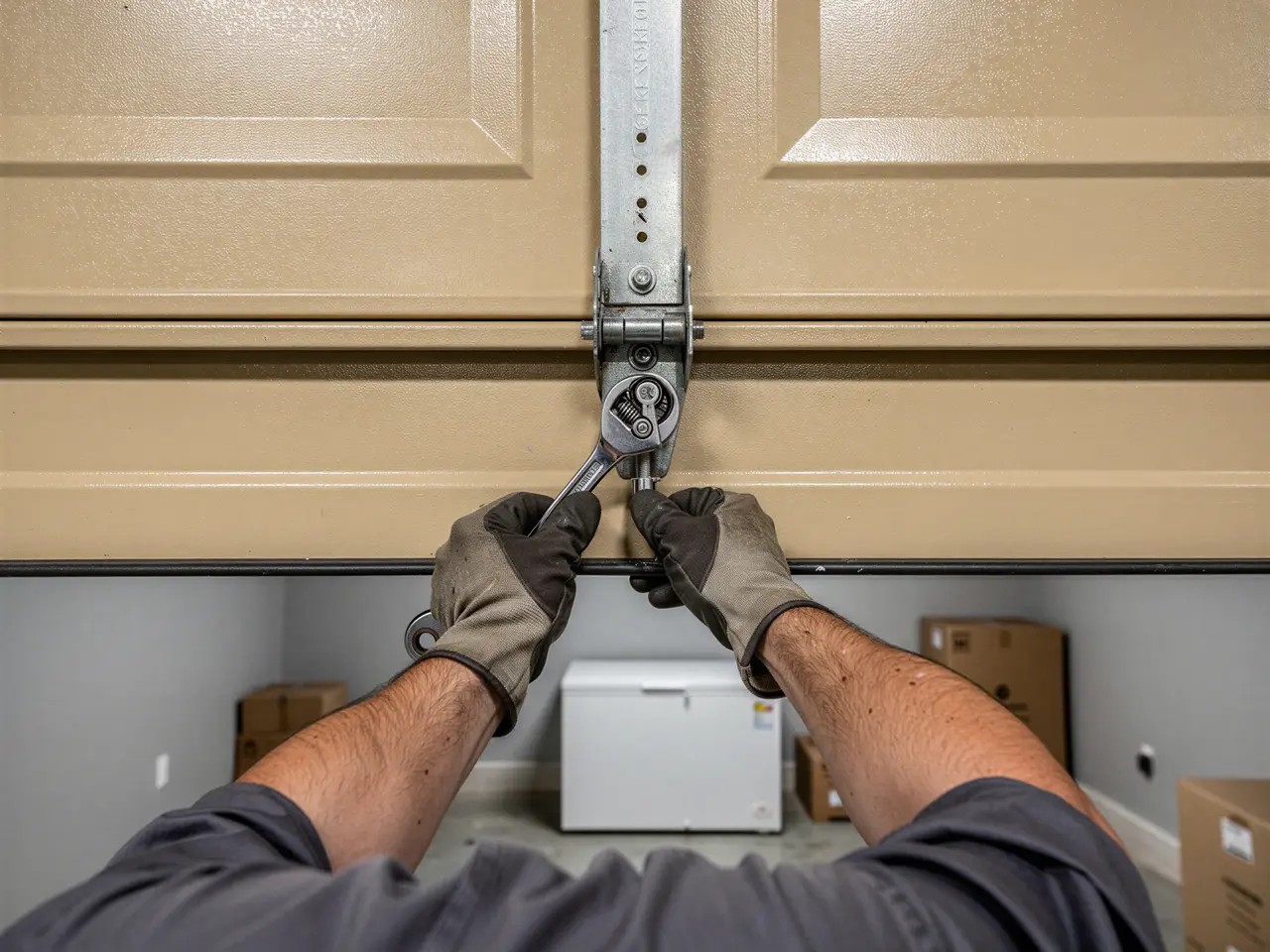
A spring swap on a standard torsion setup usually runs as one visit: we pull the old spring, measure the door weight, and wind in a spring matched to it. Cable and roller work goes the same visit in most cases. Opener replacement takes longer if the wiring or wall control is original to a house from the 1980s or 90s, since we're often matching new electronics to old bracket mounts and track alignment that was never meant to carry today's safety sensors.
What takes real time is a door that's been patched more than once already. On housing stock this old, we sometimes find two or three past repairs stacked on top of each other, a roller replaced here, a cable spliced there, and untangling that costs more labor than a clean first repair would have. That's the limitation worth naming: if your door has been fixed piecemeal for years, sometimes replacing the whole operating system costs less than one more patch job, and we'll tell you that instead of billing for a fourth fix.
Why It Happens Here
Traverse City sits in a severe cold climate band, and that matters more to a garage door than people expect. Steel contracts in deep cold, torsion springs lose tension faster in unheated garages, and nylon rollers that were fine at 60 degrees start cracking at zero. Houses built between 1967 and 2001, which is most of the stock across the service area's fifteen named neighborhoods, were built to the codes and hardware standards of their decade, not ours, and a lot of that original gear simply wasn't built for forty winters of expansion and contraction.
The pattern we see most: springs that were fine for twenty years start failing in year twenty-five, right when the cold finally finishes off metal that was already fatigued. It's not bad luck, it's the math of an aging housing stock meeting a hard climate every single winter.
What You Are Seeing
A door that slams the last foot of travel usually means a spring that's lost tension, common on houses from the 1980s and 90s where the original spring has never been swapped. A door that reverses halfway up, or an opener that runs but the door doesn't move, often points to a cable off its drum or a broken roller bracket, both of which show up more in winter when cold-stiffened hardware finally gives. If the opener motor hums but nothing happens, check the sensor eyes first; outdoor cold can throw off alignment that was fine all summer.
Homeowners within a few miles of Traverse City, including Greilickville about three miles northwest and Holiday Hills to the east, see the same failure patterns we do in town, since the building years and winters are shared across the service area. If your door is making noise you haven't heard before, that's worth a call before a part fails all the way and leaves the door stuck open or shut.
Frequently asked questions
Why do garage door springs fail so often in Traverse City winters?
Steel loses flexibility in severe cold, and a spring that's already carrying twenty-plus years of wear, common on houses built here between 1967 and 2001, finally gives out when temperatures drop hard. It's less about one cold snap and more about old metal meeting winter after winter.
Do you work on homes outside Traverse City proper?
Yes, we cover the surrounding service area, including places like Greilickville, Grawn, and Interlochen within about 15 miles, where houses share the same build years and climate exposure as homes in town.
How fast can you fix a broken spring?
Standard torsion spring swaps on common door sizes are usually a same-visit repair. Non-standard door widths or discontinued opener models may need a part ordered first, which adds time we can't control.
Is it worth repairing an old door instead of replacing it?
If the door has had multiple patch repairs stacked over the years, sometimes replacing the whole operating system costs less long-term than another single-part fix. We'll tell you honestly which side of that line your door is on.
By Neighborhood
Garage Door Repair across the Traverse City area
We also handle garage door repair in these Traverse City-area suburbs.
Book garage door service in Traverse City
Call now or request a quote - tell us what the door is doing and where you are.