
Traverse City, MI · Garage Door Service
Garage Door Service for Grant, MI
Grant, MI homes went up around 1995, later than most of the Traverse City area. We cover the steel sectional doors and torsion hardware that era actually used.
- Repairs & new doors
- Springs & openers
- Serving 7 nearby communities
What the Repair Takes
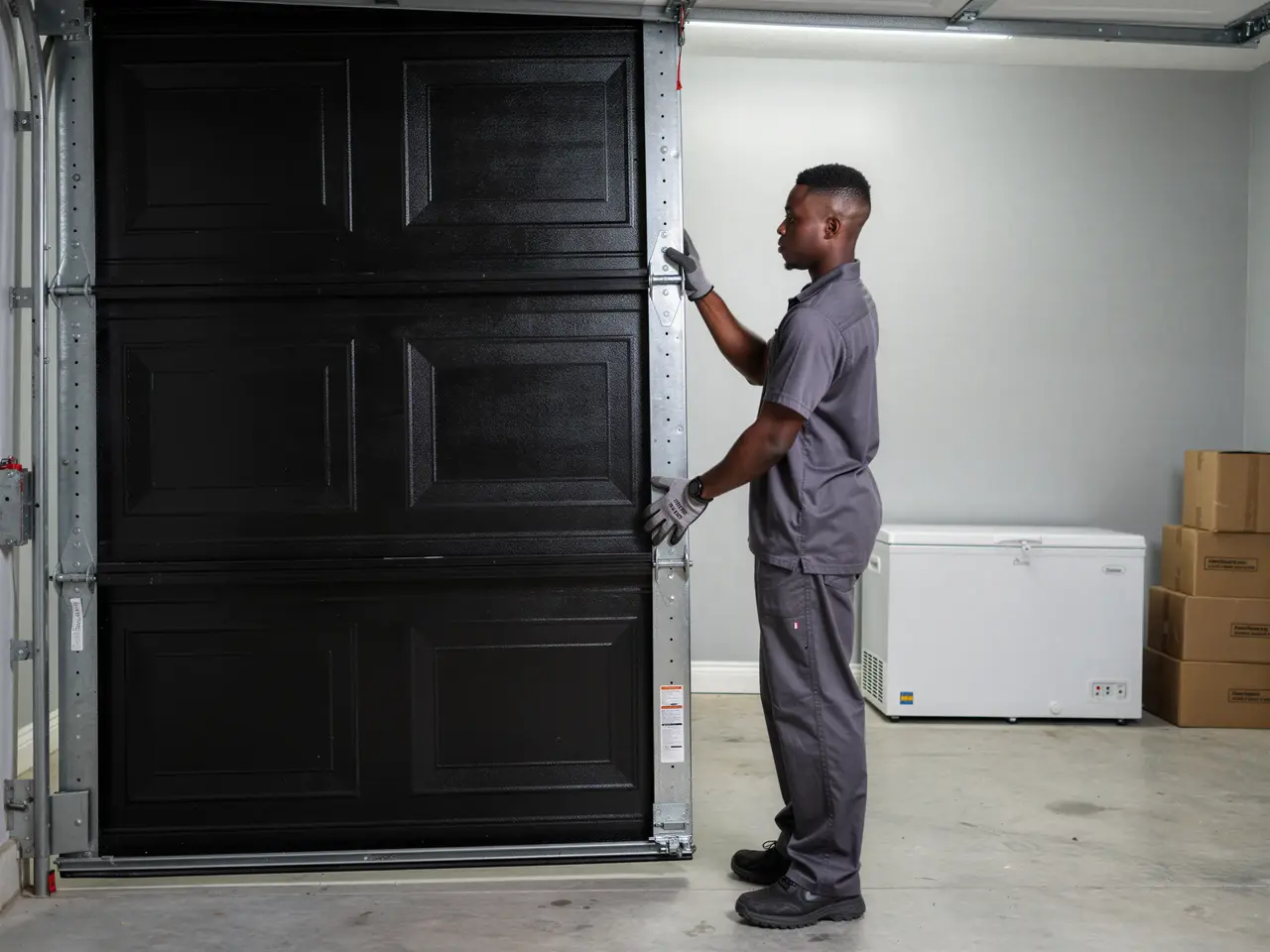
A house in Grant going up around 1995 almost always got a steel sectional door, not the old one-piece slab you'd see on something built in the 1960s. Most are 16x7 doubles or 9x7 singles, raised-panel steel with a layer of insulation sandwiched in, hung on torsion springs mounted on a shaft above the opening rather than the older side-mounted extension springs. That matters for the repair: torsion spring work means we're dealing with a wound shaft under real tension, and the job takes the right winding bars and a cable drum that matches your door's weight, not a universal part off a shelf. Builder-grade openers from that period are usually chain-drive, often the original unit if nobody's swapped it. Parts for a 1995-era torsion system are common enough that we're not waiting on anything exotic, but the springs themselves wear out roughly on schedule - somewhere around 10,000 open-close cycles - so a door installed when the house was new is squarely in the window where the original spring has given out or is close to it. We bring stock sized for standard residential torsion setups and diagnose on site before anything gets replaced.
What You Are Seeing
The door that won't budge, or opens a few inches and stops, is usually a broken torsion spring - you'll often hear it before you see it, a loud bang from the garage when it lets go. A door that's noisy going up, grinding on one side, points to a bad roller or a cable that's started to fray off the drum. If the opener runs but the door doesn't move, the spring is the first thing we check, not the motor. Sagging in the middle of a steel panel on an older door usually means the door's near the end of its service life rather than a single part needing swapped. None of this is unique to Grant, but a neighborhood built in one era tends to fail in the same handful of ways at roughly the same time, which is useful when we're figuring out what we're walking into before the truck even leaves Traverse City.
Why It Happens Here
Grant sits about fifteen miles from Traverse City, out past Greilickville and Grawn, and the housing stock here runs a bit newer than a lot of the surrounding service area - call it mid-1990s construction against a broader area median closer to 1988. That gap matters for hardware: a door from 1995 is more likely to be factory torsion with a steel track than the mixed extension-spring setups still common in older stock nearby. The climate is the other half of it - this part of Michigan sits in a severe cold band, and a garage door spring cycling through sub-zero mornings and summer heat swings loses temper faster than the same part would somewhere milder. Steel contracts in the cold, so a track that's a quarter-inch out of alignment in July can bind hard in January. We see more cable and roller failures show up in the first real cold snap than at any other point in the year.
The Cost of This Job
We don't post flat prices here because the job changes with the door - a single torsion spring swap on a 9x7 is a different job than two springs and new cable drums on a 16x7 double, and we won't quote it sight unseen. What we can tell you is that Grant's roughly 440 households sit at a median income around $85,500, noticeably above the broader service area's $77,000, and in practice that means more of the doors we see out here are mid-grade insulated steel rather than the bare minimum builder units - which affects what a comparable replacement costs if repair isn't the right call. We'll give you a number after we've looked at the spring size, the door weight, and the opener before we touch anything.
Doing It Yourself
Lubricating hinges and rollers, checking that the photo-eye sensors are clean and aligned, and tightening loose bolts on the track brackets are all fine to handle yourself and will buy a torsion-spring door some extra years, especially through a cold winter when things bind up. Torsion springs themselves are not a do-it-yourself repair - the shaft is under enough tension to cause serious injury if it's released wrong, and that's true whether the door is five years old or twenty-five. If your opener is original to a 1995 build and starting to grind or hesitate, that's also worth having looked at rather than waiting for it to fail on a sub-zero morning. We'll tell you straight if a repair isn't worth it against replacement - we don't pad a repair ticket on a door that's at the end of its run.
Frequently asked questions
How far is Grant from your shop in Traverse City?
About fifteen miles. We travel to Grant from Traverse City for service calls; there's no separate branch out here, just the same crew making the drive.
What kind of garage door do I probably have if my house was built in the mid-1990s?
Most houses built around 1995 in this area got a steel sectional door - either a 16x7 double or 9x7 single - on torsion spring hardware mounted above the opening, usually paired with a chain-drive opener.
Why does my spring keep breaking in winter?
This area sits in a severe cold climate band, and steel springs lose their temper faster cycling through hard freezes and summer heat than they would in a milder climate. Cold snaps are when we see the most spring failures.
Can I replace a torsion spring myself?
No. The shaft holding a torsion spring is under enough stored tension to cause serious injury if released incorrectly. Lubrication and track alignment are reasonable DIY jobs; spring replacement isn't.
Book garage door service in Traverse City
Call now or request a quote - tell us what the door is doing and where you are.