
Traverse City, MI · Garage Door Service
New Garage Door Installation for Paradise Homes
Paradise homes mostly went up around 1990, a shade newer than the Traverse City average. That changes what's failing and what a new door install actually involves here.
- Repairs & new doors
- Springs & openers
- Serving 7 nearby communities
How Long It Takes
Traverse City's housing stock overall spans 1967 to 2001, with a median build year of 1988. Paradise sits a couple years past that median, with most houses going up around 1990. That's a small gap on paper, but it matters: it puts a lot of Paradise garage doors and openers right in the window where the original builder-grade equipment is now over three decades old and starting to fail for real, not just cosmetically.
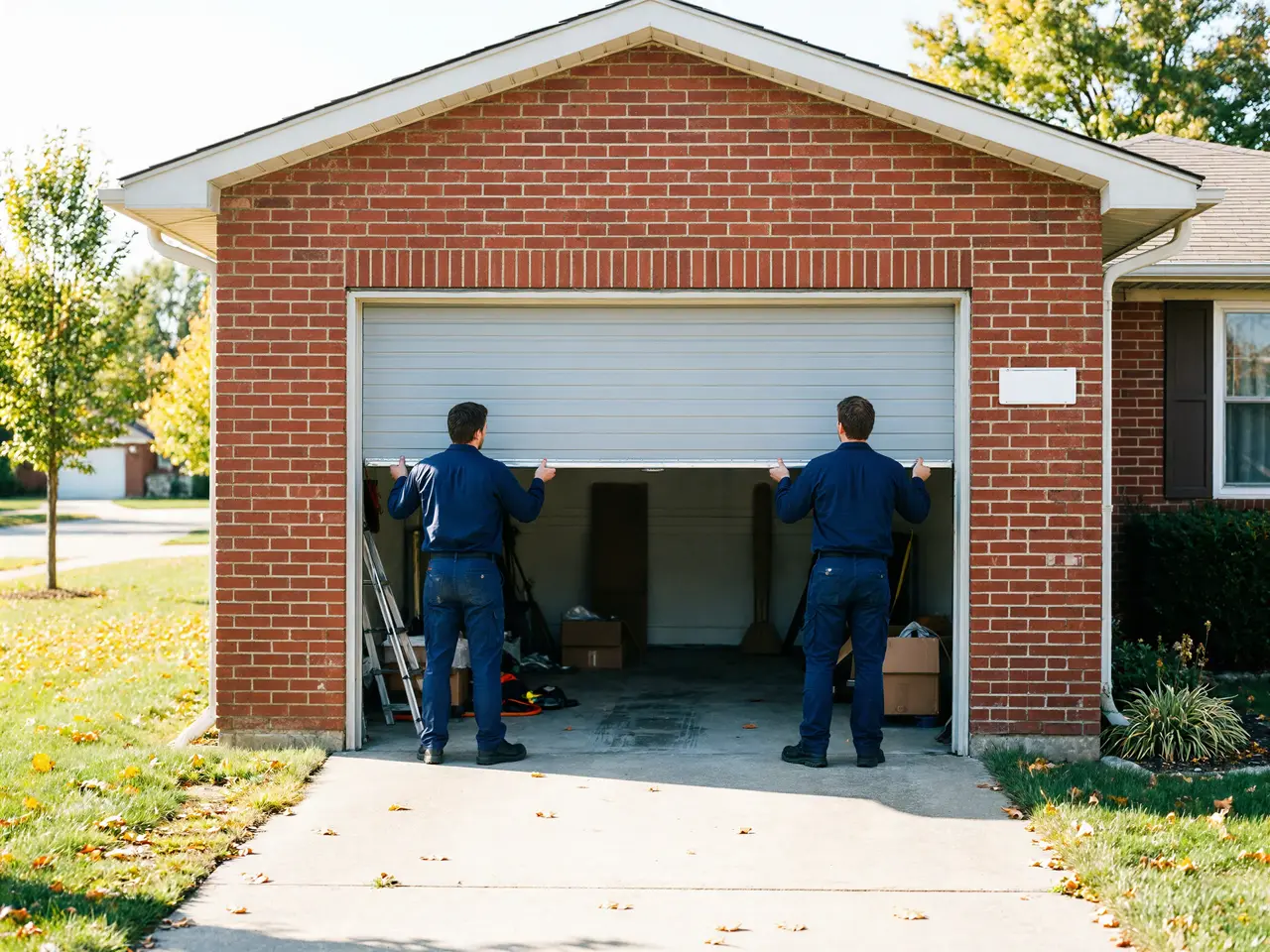
A straightforward single-door swap on an existing opening, with a crew coming out from Traverse City, usually runs a few hours start to finish - old door off, track and hardware checked, new door hung and balanced, opener reconnected and tested. If the opening needs reframing, or the existing track and spring setup from that era doesn't match anything we stock on the truck, add time for a return trip. We won't guess at a number we don't have for every job; what we can tell you is that early-90s builder-grade installs are rarely a quick panel swap once we're actually looking at the hardware.
Why It Happens Here
With roughly 1,552 households in the Paradise area, most sitting on that early-1990s build era, a big share of original garage doors and openers are reaching the end of their service life around the same time. That's not a coincidence - it's a subdivision-era thing. Builders in a given stretch of years tend to spec the same door, same track width, same chain-drive opener, from the same handful of suppliers, and those parts all age out together.
Layer the climate on top of that. This area sits in a cold, severe winter climate band, and garage doors here take a harder beating than the national average door was engineered for - repeated freeze-thaw cycling on seals, hardware, and insulation foam that was fine when it was new but wasn't built for thirty winters of it. Combine an aging builder-grade door with that kind of climate load and you get doors that don't fail gracefully. They bind, they sag, they stop sealing at the bottom, and eventually the spring just lets go.
What You Are Seeing
If your house is part of that early-1990s wave, the door you're looking at is probably the original one. Tell-tale signs: a single torsion spring instead of two, a thin steel panel with little or no insulation, and a chain-drive opener that's noticeably louder than anything made in the last ten years. None of that is a defect - it's just what was standard to build in this area at the time.
The failure pattern we see most in these houses is the door still closing but not sealing, especially along the bottom edge, plus an opener that strains or reverses partway through the cycle. That's usually the spring losing tension and the opener compensating for it, not the opener itself failing. On a 30-plus-year-old door, patching the spring and leaving the rest is often a short-term fix - the drum, the cable, and the track wear are usually close behind.
Doing It Yourself
Swapping the door itself is not a weekend project, and we'll say that plainly: a torsion spring under load can put someone in the hospital, and getting the panel alignment wrong on a new install leaves you with a door that binds for years. Where a homeowner can reasonably do their own work is maintenance - lubricating rollers and hinges, checking weatherstripping for the kind of cracking you get after repeated winters, and tightening visible hardware on the track brackets.
What we don't recommend trying yourself on a house this age: removing the old door, disconnecting the spring system, or rewiring the opener. If you're not sure whether your door needs a repair or a full replacement, that's a judgment call based on what's actually underneath the panel - rust on the track, cable fraying, drum wear - and that's worth a look before you spend money either way.
What Is on the Truck
Because we're coming out from Traverse City, about 13 miles to Paradise, the truck is loaded for what we expect to find in homes from this build era: standard torsion springs sized for the common door widths from that period, steel and insulated panel sections in the dimensions that were typical builder stock, and chain-drive and belt-drive opener units to replace the aging originals.
We don't carry every custom width or a full stock of discontinued hardware from 1990-era builds - some of that is special order, and we'll tell you up front if that's the case rather than make you wait on-site. For a standard single or double garage door replacement, most of what's needed for a Paradise install is already on the truck when we head out.
Frequently asked questions
Why does my opener strain even though the door still closes?
On a door from this era it's usually the torsion spring losing tension, not the opener failing. The motor compensates by working harder to lift a door that's no longer properly balanced, which strains the gears and shortens the opener's life. Replacing the spring often fixes this without touching the opener at all.
Do you keep a crew or parts stocked near Paradise?
No. We're based in Traverse City, about 13 miles away, and travel out to Paradise for installs. The truck is loaded in advance for what's common in houses from this build era, but we don't maintain a local depot or stock in Paradise itself.
Is it worth replacing just the door and keeping the old opener?
Often yes, if the opener is working fine and was made in the last decade or so. If it's the original chain-drive unit from the early '90s, we'll usually recommend replacing both at once - pairing a new door with worn-out opener hardware just moves the next failure down the road a year or two.
Book garage door service in Traverse City
Call now or request a quote - tell us what the door is doing and where you are.